As if it wasn't bad enough that the keffiyeh has been warranting so much debate thanks to its inappropriate adoption by those who think Urban Outfitters invented the thing, Palestine is again making news in the fashion world due to the production of a this tee shirt (as featured on the Fashionista website) displaying the image of a Palestinian youth holding a gun with the word "Victimized" written below him. While Fashionista appears to dislike the shirt, as well as totally misunderstand its purpose (there's no explanation of "why it was intended to be funny or ironic" because it WASN'T, geniuses), Freshjive-- the company that created it-- has offered an eloquent, intelligent, and perfectly acceptable defense of the shirt and rationale for its production.
While I am very critical of Urban Outfitters (namely because their clothes are way overpriced and often way ugly, plus the keffiyeh issue of course), I am not surprised they sold the shirt, given their apparent habit of wrongly using Palestinian images and culture for capitalist purposes. I am also not surprised they pulled the shirt, as they obviously weren't selling it for political reasons (and clearly have no backbone). So of course, that fact is a source of annoyance. But the reason I have Freshjive's back on this issue is because this is not a matter of simple misappropriation. The company knew exactly what they were doing by making the shirt; it wasn't (only) a money thing. Rather, the shirt was created as a political statement, a part of the company's "The World's Got Problems" line in which true political issues facing the world today are brought into the open. As Rick, the owner of Freshjive, states in his defense, "is it not simply true that some Palestinian kids have become child soldiers due to the ongoing battle between Palestine and Israel?... Is it not simply true that some Palestinians and especially Palestinian children are victims of this terrible conflict?" Can't deny that.
Even more so, I have their back because of the criticism they have received for the shirt-- not just aesthetic (that people think it is ugly or in poor taste because it features an unfortunate truth) but political. People have actually complained that the shirt is, among other things, a "brutal, bloody, Jew-hating tee shirt." I am pretty sure, just by looking at the shirt, that there is no mention of Jews (or people of any religion or ethnicity other than Palestinian) on it, and that it claims no political opinion thereof; it simply states that Palestinian children have often been victimized as a result of the conflict in Palestine, as stated above. There's nothing else to it, and if you have to make that kind of leap to support your case, you don't have much of one-- and if you are so quick to label things as hateful or bigoted when they really aren't, you should probably examine why you need to be that defensive to begin with.
Personally, I like what the shirt is saying and the creator's reason for making it. I think anyone who wears it-- unlike the ubiquitous keffiyeh-usurpers-- knows what it means and knows why they are wearing it, which I support. While I do have to think that it might serve to objectify Palestinians even more so than they already are, I also appreciate the fact that a company is taking these risks to speak their opinions and speak the truth about what goes on in the world-- the things that people don't like to think about or admit.
Tuesday, May 27, 2008


Thursday, May 1, 2008
Al-Nakba Event in SF!
Bay Area people (or should I say, beble?), you MUST come to this event on Saturday May 10 in SF, recognizing 60 years of al-Nakba (the Disaster) in Palestine-- the destruction of homes, seizure of land, denial of existence, and, yes, apartheid state, for Palestinians. It is being organized in part by our very own hardworking Miss al-FallaHa, among others, and is going to be excellent. The entertainment features the amazing local soul-funk-hiphop band the Scribe Project, the lovely and talented DJ Emancipacion, NaR, Dam, and other hotness.
Here's the scoop from the organizers, plus the flyer. Remember, the event is FREE and close to BART and Muni. Yalla, come out!

Here's the scoop from the organizers, plus the flyer. Remember, the event is FREE and close to BART and Muni. Yalla, come out!
The Local Nakba Committee
and the Palestine Right to Return Coalition Present
Nakba-60, Palestine Peace and Solidarity Festival
MAY 10TH 2008, 12-6pm
CIVIC CENTER, SAN FRANCISCO
We invite you to commemorate 60 years of struggle and resistance on the anniversary of the Palestinian Nakba, Arabic for "catastrophe" and marks the expulsion, dispossession and ethnic cleansing of the Palestinian people.
Bring the family, and join us for a special day of resistance music, cultural and youth programs, Nakba tent/art, Dabka, local solidarity groups and more! Meet survivors from 1948, and learn about the tragedy, while listening to Palestinian and Native American elders recount their experiences. Childcare assistance will be provided on-site.
FREE AND OPEN TO THE PUBLIC
Artists:
Dam, featuring Abeer – see: www.dampalestine.com
Shadia Mansour: http://profile.myspace.com
Fred Wreck
Ras Ceylon
Arab Summit: Narcicyst, Excentrik, Omar Offendum, Ragtop
Scribe Project
Rebel Diaz
Special performances by: Boots Riley, NaR, Mamaz, Kiwi, Polikal Heat, Rithmatik, Patriarch, and DJ Emancipacion - with MC's: Noura Erakat and Maysoon Ziyad.
We need your support!
Please donate what you can! Make your tax-deductible donation payable to 'Palestine Right to Return Coalition' or "PRRC/Palestine Solidarity" and mail to:
Local Nakba Committee (LNC)
PO Box #668
2425 Channing Way
Berkeley, CA 94704
To donate online: go to: www.al-awda.org, and please make sure to include 'Nakba-60, Palestine Solidarity Festival in the notes, or to the Facebook cause titled "Nakba-60, FREE Palestine Peace & Solidarity Festival".
A special thank you to event partners: Al-Awda, Arab Resource & Organizing Center, Middle East Children's Alliance, American Indian Movement, International Jewish Solidarity Network

Tuesday, April 29, 2008
Never Forget.
Let us never forget the injustices carried out against those who have done nothing to deserve the terror and displacement and apartheid and genocide enforced upon them. Let us never forget our people, our struggles, and the land from which we came, from which we were banished, to which we will someday rightfully return. Let us not forget that many of us fled our stolen land only to settle in stolen land, and that it is our responsibility to stand in solidarity with others as we stand for our own struggles. Let us not forget the meaning of the word "home" and hold it with us even when it feels we do not have one. Let us never forget, even as many of those who've had the sharpest memories and suffer the deepest wounds leave us. Let us never forget that these things still happen, today, all around the world.
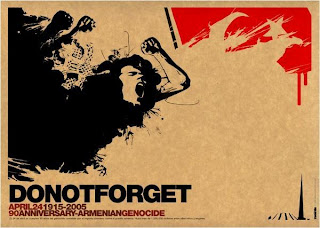
For Armenia. For Palestine. For Sudan. For Iraq. For America. For the world.

For Armenia. For Palestine. For Sudan. For Iraq. For America. For the world.
Wednesday, April 9, 2008
Look Into My Eyes
Look into my eyes, tell me what you see
You don’t see a damn thing, cuz you can’t relate to me.
You’re blinded by our differences, my life makes no sense to you.
I’m the persecuted one, you’re the red white and blue.
You stay awake in tranquility, a face to cross your eyes.
Each day I wake in gratitude, thanking God he let me rise.
You worry about your education and the bills you have to pay,
I worry about my vulnerable life, and if I’ll survive another day.
Your biggest fear is getting a ticket as you close your cadillac,
My fear is that the tank that has just left will turn around and come back.
Do you know the truth of where your money goes?
Do you let the media deceive your mind?
Is this the truth, that nobody, nobody, nobody knows?
Someone tell me, ooohh
Let’s not cry tonight, I promise you one day is through
Ooohh my brothers, ooohh my sister, ooohh
Shine a light for every soul that ain’t with us no more,
Ooohh my brothers, ooohh my sisters.
See, I’ve known terror for quite some time.
57 years so cruel.
Terror breathes the air I breathe
It’s the checkpoint on my way to school.
Terror is the rivalry of my land, and the torture of my mother
The imprisonment of my innocent father, the bullet in my baby brother.
The bulldozers and the tanks
The gasses and the guns
The bombs that fall outside my door, all due to your funds.
You blame me for defending myself against the ways of my enemy,
I’m terrorized in my own land, and I the terrorist.
Do you know the truth of where your money goes?
Do you let the media deceive your mind?
Is this the truth, that nobody, nobody, nobody knows?
Someone tell me, ooohh
Let’s not cry tonight, I promise you one day is through
Ooohh my brothers, ooohh my sister, ooohh
Shine a light for every soul that ain’t with us no more,
Ooohh my brothers, ooohh my sisters.
America do you realize that the taxes that you pay
Feed the forces that traumatize my every living day?
So if I won’t be here tomorrow, it’s written in my faith
May the future bring a brighter day, the end of our wait.
Ooohh, let’s not cry tonight, I promise you one day is through
Ooohh my brothers, ooohh my sister, ooohh
Shine a light for every soul that ain’t with us no more,
Ooohh my brothers, ooohh my sisters.
Ooohh, let’s not cry tonight, I promise you one day is through
Ooohh my brothers, ooohh my sister, ooohh
Shine a light for every soul that ain’t with us no more,
Ooohh my brothers, ooohh my sisters.
http://www.youtube.com/watch?v=3P12aqVeZkQ
I encourage everyone to listen to this beautiful song. It might just open up your eyes a bit... and maybe make them tear. (And yes, I transcribed it all by myself :)
You don’t see a damn thing, cuz you can’t relate to me.
You’re blinded by our differences, my life makes no sense to you.
I’m the persecuted one, you’re the red white and blue.
You stay awake in tranquility, a face to cross your eyes.
Each day I wake in gratitude, thanking God he let me rise.
You worry about your education and the bills you have to pay,
I worry about my vulnerable life, and if I’ll survive another day.
Your biggest fear is getting a ticket as you close your cadillac,
My fear is that the tank that has just left will turn around and come back.
Do you know the truth of where your money goes?
Do you let the media deceive your mind?
Is this the truth, that nobody, nobody, nobody knows?
Someone tell me, ooohh
Let’s not cry tonight, I promise you one day is through
Ooohh my brothers, ooohh my sister, ooohh
Shine a light for every soul that ain’t with us no more,
Ooohh my brothers, ooohh my sisters.
See, I’ve known terror for quite some time.
57 years so cruel.
Terror breathes the air I breathe
It’s the checkpoint on my way to school.
Terror is the rivalry of my land, and the torture of my mother
The imprisonment of my innocent father, the bullet in my baby brother.
The bulldozers and the tanks
The gasses and the guns
The bombs that fall outside my door, all due to your funds.
You blame me for defending myself against the ways of my enemy,
I’m terrorized in my own land, and I the terrorist.
Do you know the truth of where your money goes?
Do you let the media deceive your mind?
Is this the truth, that nobody, nobody, nobody knows?
Someone tell me, ooohh
Let’s not cry tonight, I promise you one day is through
Ooohh my brothers, ooohh my sister, ooohh
Shine a light for every soul that ain’t with us no more,
Ooohh my brothers, ooohh my sisters.
America do you realize that the taxes that you pay
Feed the forces that traumatize my every living day?
So if I won’t be here tomorrow, it’s written in my faith
May the future bring a brighter day, the end of our wait.
Ooohh, let’s not cry tonight, I promise you one day is through
Ooohh my brothers, ooohh my sister, ooohh
Shine a light for every soul that ain’t with us no more,
Ooohh my brothers, ooohh my sisters.
Ooohh, let’s not cry tonight, I promise you one day is through
Ooohh my brothers, ooohh my sister, ooohh
Shine a light for every soul that ain’t with us no more,
Ooohh my brothers, ooohh my sisters.
http://www.youtube.com/watch?v=3P12aqVeZkQ
I encourage everyone to listen to this beautiful song. It might just open up your eyes a bit... and maybe make them tear. (And yes, I transcribed it all by myself :)
Thursday, April 3, 2008
Wayward Hookah Girl
I've been looking for something positive and creative to post about after the exit of Project Rami-- and lord knows those can be hard to find, these days. However, today while performing a Google search for an art project, I stumbled upon the website of Marguerite Dabaie, a Palestinian-American artist and cartoonist based in Brooklyn who was born and raised in S.F. Check out the work on her page, which includes excerpts from her book, Hookah Girl and Other True Stories (which is available for purchase at what I believe is a very reasonable cost). Her work reminds me of Alison Bechdel and Joe Sacco rolled up in kickass wayward Pali girl attitude, addressing (from what I can tell so far) the idea of being Palestinian, American, and female, from childhood through adulthood, through topics such as the annual Palestine Day festival in SF, grandparents and tradition, identity politics, and the keffiyeh as a designer fashion accessory (which you know I have an opinion about!).
Check out her page! And also check out the links on her Hookah Girl site for more Arab-related political and artists' sites. It's always exciting to hear from another wayward ME girl who's doing something different, making art out of life and identity, and making herself heard. Word!
Check out her page! And also check out the links on her Hookah Girl site for more Arab-related political and artists' sites. It's always exciting to hear from another wayward ME girl who's doing something different, making art out of life and identity, and making herself heard. Word!
Homophobes Are Gay
The proof is in the pudding. And by pudding, I mean a study which has proven that "homophobic behaviors are just the schoolyard bully's more obvious version of a hanky code" (Violet Blue). Tell that to the unfunny Jay Leno-- who, honestly, I had no idea was still on TV-- and his apparent bizarre fixation with Ryan Phillippe's long-ago gay soap opera role. Hmm. Violet Blue investigates!
Makes sense, really. If you're a straight person who brings up the issue of gayness randomly, unnecessarily, and often, or if you're so homophobic that you actually spend your time and effort protesting against gayness-- as with the person mentioned at the end of Violet's column, and numerous others-- or, even more so, dedicate whole chunks of your life and career to homophobia (Jerry Falwell, et. al.), there's got to be something deeper lurking behind the surface, and I don't just mean hot air (though there's lots of that too). Seriously, if you weren't thinking about gayness all the time, you wouldn't be doing that. And thus, you make yourself fodder for the plots of certain genres of adult films...
Makes sense, really. If you're a straight person who brings up the issue of gayness randomly, unnecessarily, and often, or if you're so homophobic that you actually spend your time and effort protesting against gayness-- as with the person mentioned at the end of Violet's column, and numerous others-- or, even more so, dedicate whole chunks of your life and career to homophobia (Jerry Falwell, et. al.), there's got to be something deeper lurking behind the surface, and I don't just mean hot air (though there's lots of that too). Seriously, if you weren't thinking about gayness all the time, you wouldn't be doing that. And thus, you make yourself fodder for the plots of certain genres of adult films...
Monday, March 17, 2008
"Desert Scarves," or, The Misappropriation of Culture
As my cohort the Prince of Kabob introduced in a previous post, one subject that has received much of my ire lately is the recent (though not new) trend of wearing the Palestinian keffiyeh, apparently known to Urban Outfitters (among other retailers) and clueless wearers as a "desert scarf," as a casual clothing accessory. My opinion on the matter began as interested, became conflicted, and eventually has evolved into straight-up anger. When I first began to see people wearing the keffiyeh a couple of years ago-- here and there, not very often-- I would think that it was maybe kind of cool, that maybe they were wearing it as a political statement of being down for the Palestinian cause-- but mostly, I wondered why 21st century San Francisco hipsters were interested in dressing like my deceased great-grandfather and his peers, the keffiyeh being first and foremost just a regular old traditional Arab scarf that farmers and other men used to wear (and still do) to protect their heads from the sun and dirt and sand, which has also evolved into a symbol of Palestinian nationalism and culture. I too have worn the keffiyeh, before this "desert scarf" business came about, both as a symbol of my activism and heritage, and as a means of keeping warm.
Within the past couple of years, though, more and more people-- namely those trend-focused persons whose numerous atrocities in the name of "fashion" I will refrain from detailing at the moment-- have been wearing the keffiyeh, to the point at which it has evolved into a simple, mass-produced, completely inauthentic, trendy piece of clothing that has lost its meaning. I have seen it sold, in many ridiculous colors, by Urban Outfitters (as mentioned before), at army surplus stores, and at shops in trendy neighborhoods.
My issues here are severalfold. First, it makes me laugh that people will pay eighteen dollars (!) for this mass-produced item, when the real thing (which is much more attractive, incidentally) costs much less. Second, it irritates me that people are appropriating this piece of Arab culture without having any idea at all what it represents, or what it means to wear this, or caring to find out, or even knowing its origin-- in essence, being very ignorant about what they choose to put on their bodies. I realize that some non-Arab people do wear this while participating in acts of activism or in support of the cause, and I accept this as long as they educate themselves on the keffiyeh and its meaning and do not fetishize it or the Palestinian/Arab people. If you like the scarf and want to wear it, fine-- just know what it's all about.
Perhaps most of all, it angers me that Arab culture is being commodified and sold by a capitalist and colonialist nation which dares to accuse people of terrorism while unapologetically committing horrible acts of terrorism itself (see previous post for an example). Essentially the commodification of the keffiyeh is an act to discredit the Palestinian cause, making it something to take lightly via the mainstream misappropriation of one of its most recognizable images. That a nation's retailers would promote the production and sale of this imitation item while simultaneously condemning those who have worn it and brought it into the public view as an item of both culture and the cause (Leila Khaled, Arafat, the Palestinian people and most Arabs) is outrageous and hypocritical, but, sadly, not surprising. Why not make a few bucks off the people who we work hard to keep ignorant (Americans) and who we work hard to disenfranchise and destroy (Palestinians, Iraqis, etc...)? It is, after all, the American way!
Yes, I do think it carries much different meaning when an Arab-American wears the scarf as opposed to other types of American. I will bet you that 99 percent of the time, when an Arab wears this scarf, this person will know exactly what it means to do so, whether culturally or as a sign of solidarity, or both. I know that this is not the case with most of those who wear the sweatshop-made, mass-produced imitations in such fun colors as pink and yellow. If somebody likes the appearance of the keffiyeh and chooses to wear it, they are free to do so, but in my opinion should at least be aware of the connotations, and if they do not agree with them, or do not care either way, should not wear the keffiyeh. It troubles me to have my heritage and my people's struggles commodified and trivialized in such a way, and that is exactly what is being done, whether the wearer is aware of it or not.
And for the record, it's not called a freaking "desert scarf."
Within the past couple of years, though, more and more people-- namely those trend-focused persons whose numerous atrocities in the name of "fashion" I will refrain from detailing at the moment-- have been wearing the keffiyeh, to the point at which it has evolved into a simple, mass-produced, completely inauthentic, trendy piece of clothing that has lost its meaning. I have seen it sold, in many ridiculous colors, by Urban Outfitters (as mentioned before), at army surplus stores, and at shops in trendy neighborhoods.
My issues here are severalfold. First, it makes me laugh that people will pay eighteen dollars (!) for this mass-produced item, when the real thing (which is much more attractive, incidentally) costs much less. Second, it irritates me that people are appropriating this piece of Arab culture without having any idea at all what it represents, or what it means to wear this, or caring to find out, or even knowing its origin-- in essence, being very ignorant about what they choose to put on their bodies. I realize that some non-Arab people do wear this while participating in acts of activism or in support of the cause, and I accept this as long as they educate themselves on the keffiyeh and its meaning and do not fetishize it or the Palestinian/Arab people. If you like the scarf and want to wear it, fine-- just know what it's all about.
Perhaps most of all, it angers me that Arab culture is being commodified and sold by a capitalist and colonialist nation which dares to accuse people of terrorism while unapologetically committing horrible acts of terrorism itself (see previous post for an example). Essentially the commodification of the keffiyeh is an act to discredit the Palestinian cause, making it something to take lightly via the mainstream misappropriation of one of its most recognizable images. That a nation's retailers would promote the production and sale of this imitation item while simultaneously condemning those who have worn it and brought it into the public view as an item of both culture and the cause (Leila Khaled, Arafat, the Palestinian people and most Arabs) is outrageous and hypocritical, but, sadly, not surprising. Why not make a few bucks off the people who we work hard to keep ignorant (Americans) and who we work hard to disenfranchise and destroy (Palestinians, Iraqis, etc...)? It is, after all, the American way!
Yes, I do think it carries much different meaning when an Arab-American wears the scarf as opposed to other types of American. I will bet you that 99 percent of the time, when an Arab wears this scarf, this person will know exactly what it means to do so, whether culturally or as a sign of solidarity, or both. I know that this is not the case with most of those who wear the sweatshop-made, mass-produced imitations in such fun colors as pink and yellow. If somebody likes the appearance of the keffiyeh and chooses to wear it, they are free to do so, but in my opinion should at least be aware of the connotations, and if they do not agree with them, or do not care either way, should not wear the keffiyeh. It troubles me to have my heritage and my people's struggles commodified and trivialized in such a way, and that is exactly what is being done, whether the wearer is aware of it or not.
And for the record, it's not called a freaking "desert scarf."
Subscribe to:
Posts (Atom)